
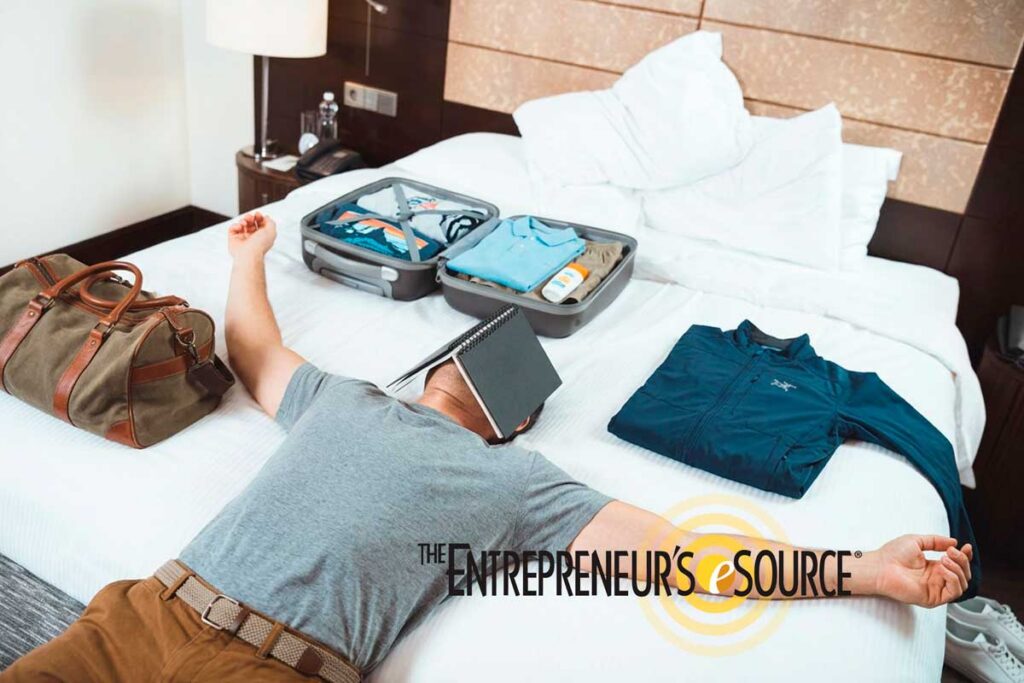
“Travelscrimping”: They Want You on the Road. They Just Don’t Want to Pay for It.
“Travelscrimping” is the latest sign that corporate North America sees employees as a cost to manage, not a person to invest in. Here’s what to do about it.
 Imagine this: Your company sends you on a three-day business trip. You’re expected to represent the brand, close deals, and project confidence. But when you check the travel policy, it says to find a hotel room for $100 a night, buy your meals at a grocery store, and take your dress shirts to a laundromat instead of using the hotel’s laundry service.
The Wall Street Journal recently reported on a growing trend called “travelscrimping”—the practice of companies quietly stripping the last remaining comforts from business travel to cut costs. In one widely reported example, a major restaurant chain told employees to eat at its own locations for “all or the majority” of meals while traveling, with any alcohol requiring advance management approval (The Wall Street Journal / NBC News, February 2026).
It’s a small indignity. But it’s also a loud signal about where the modern employee stands in the corporate priority list.
The Data Behind the Squeeze
SAP Concur’s 2025 Global Business Travel Survey—which polled 3,750 business travelers, 700 travel managers, and 600 CFOs across 24 markets including the U.S. and Canada—found that roughly 60% across all three groups confirm travelscrimping is actively being implemented at their companies. Eighty-seven percent of business travelers say their company has cut back on perks it previously allowed: in the past twelve months alone, 30% lost access to business or premium class, another 30% lost overnight stays—forcing exhausting day trips that once would have included a hotel—and 26% say their employer is less willing to pay for a nonstop flight (SAP Concur, 2025).
Deloitte’s 2025 Corporate Travel Survey reinforces the trend: 54% of travel managers now cite cost as one of the top factors restricting travel—up from 48% just one year earlier. The share of companies anticipating budget cuts nearly doubled, rising from 6% to 10%, and for companies with annual travel budgets over $7.5 million, one in five now expects to spend less (Deloitte, September 2025).
When Employees Pay the Price—Literally
 Here’s what makes travelscrimping especially corrosive: employees are quietly absorbing the cost themselves. SAP Concur found that 85% of business travelers are willing to use their own personal funds to improve their comfort on work trips—paying out of pocket for meals, better seats, and a decent night’s sleep just to do their jobs without feeling demoralized.
At the same time, 43% of CFOs admit that more than half of their company’s business travel could be replaced by virtual meetings. So the trips are often marginal in the first place—and the people sent on them are expected to endure the discomfort cheaply (SAP Concur / CFO.com, 2025).
Travelscrimping Is a Symptom, Not the Disease
Travelscrimping doesn’t happen in a vacuum. It arrives alongside return-to-office mandates, stagnant wages, mass layoffs, and the growing fear that AI could eliminate your role entirely. Monster’s 2026 WorkWatch Report found that 58% of North American workers say their salary isn’t keeping pace with inflation, 40% report concerns about burnout or mental health, and 49% worry AI could threaten their job or industry.
For millions of North Americans, working in someone else’s company has become a daily exercise in doing more with less—while being told to be grateful you still have a seat. The TES Generational Career Confidence Survey found that nearly a third of business owners (32%) said a toxic work environment motivated them to start their own business—with Gen Z business owners reporting this most often at 44%. Nearly half of employees (49%) say ageism keeps them trapped in unsatisfying jobs because they’re afraid to look for something new.
When the company you work for won’t pay for a nonstop flight but expects you to fly across the country to close a deal, it’s worth asking: who is this career really serving?
What If You Owned the Trip—and the Business?
Business owners don’t travelscrimp themselves. They make strategic decisions about every dollar because every dollar is theirs. If a client meeting requires a good hotel and a direct flight, they book it—because they understand the ROI. When they save money, the savings go into their business, not into a corporate budget they’ll never see.
That shift in mindset—from expense to investment—is the heart of Career Ownership. The TES Generational Career Confidence Survey found that four in five employees (80%) say owning a business would give them more control over their career, with Millennial employees most likely to feel this way at 86%. Two-thirds of North Americans (66%) say business ownership offers more job security than working for someone else, and seven in ten (70%) believe it provides more opportunities than traditional employment. These aren’t dreamers. These are experienced professionals who can see the math.
You Don’t Have to Navigate This Alone
 A Career Ownership Coach® from The Entrepreneur’s Source® offers a free, confidential process that helps you step back from the daily grind and take an honest look at where you are—and where you could be. Your Coach doesn’t push you toward any particular path. Instead, they guide you through a structured discovery process that helps you understand your strengths, explore business models that fit your life, and evaluate opportunities with clarity and confidence.
You won’t get a sales pitch. You’ll get something far more valuable: a clear picture of what’s possible based on your I.L.W.E.™ goals—your Income, Lifestyle, Wealth, and Equity. The TES Generational Career Confidence Survey found that 83% of North Americans believe owning a business is a viable alternative to a traditional career, and among business owners, 41% said it improved their confidence—with Gen X owners reporting the highest boost at 54%. For more than 40 years, The Entrepreneur’s Source® has helped tens of thousands of North Americans turn workplace frustration into career transformation.
The Real Cost of Travelscrimping
Travelscrimping isn’t going to end. The question is whether you’re going to keep absorbing it—or start building something that puts you back in control.
The next time your company asks you to pack your own lunch and hunt for a $100 hotel room, ask yourself: Is this the career I chose? Or is this just the career that happened to me?
You deserve an honest answer. And you deserve a guide who can help you find it.
Start your free, confidential Career Ownership Coaching™ conversation today.
 About Your Career Revolution
Our mission is to help individuals explore self-sufficiency as an alternative career.
We help them define their Income, Lifestyle, Wealth, and Equity goals and provide education on the best ways to achieve them. We don’t sell franchises – we help people achieve their dreams of self-sufficiency through business ownership. The approach is different, the experience is different. And it works.
Order on AMAZON
Learn More About Career Ownership Coaching™
If you are considering a career change, invest in yourself to discover your options, possibilities, and dreams. Chat with one of our coaches to begin your career revolution. To learn more about Career Ownership Coaching™, visit www.entrepreneursource.com or check out our guidebook, “Your Career Revolution: Reimagine and Reclaim the Life of Your Dreams.”
Watch Episodes on YouTube or Listen as a Podcast and more!